
AI & Marketing Now
AI Shopping Agents
AI shopping agents are emerging as digital personal shoppers that can find products, compare prices, and even complete purchases on your behalf, transforming how people shop online by handling everything from discovery to checkout within a single conversation. These intelligent assistants represent a significant shift from traditional e-commerce browsing to conversational commerce, where you simply describe what you need and the agent takes care of the rest.

How AI Shopping Agents Work
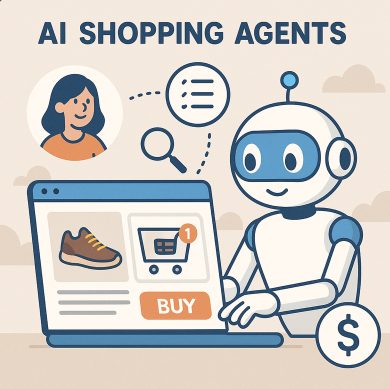
These digital assistants operate by combining several technologies to understand your needs and execute shopping tasks autonomously. When you describe what you want in plain language — like “find a durable backpack under $100 for my laptop” — the agent uses natural language processing to interpret your request and convert it into searchable product criteria.
The process involves three key steps: first, agents analyze data from your browsing history, purchase behavior, and stated preferences to understand your shopping patterns; second, they scan multiple retailer catalogs, compare prices, read reviews, and evaluate product specifications to identify the best matches; finally, advanced agents can take action by building shopping carts, applying coupons, and even completing purchases with your approval, all without leaving the conversation. This agentic AI system is designed to reason and act on your behalf, making shopping decisions based on the criteria you’ve provided while maintaining transparency about why certain products were selected. (sources)
Current Examples and Platforms
Major tech companies and retailers have launched sophisticated shopping assistants that demonstrate the current capabilities of this technology. Perplexity’s Buy with Pro allows users to complete entire purchases within a chat interface, while OpenAI is developing agents that can book flights and handle complex transactions. Amazon’s Rufus assists customers with product questions and comparisons directly within the app, and retail giants like Walmart have integrated voice ordering and natural-language search capabilities.
The infrastructure supporting these agents has expanded rapidly, with companies like Shopify, Google, PayPal, and Mastercard building “agentic commerce” systems that enable safe access to product catalogs and secure payment processing across multiple stores. According to recent reports, OpenAI and Google are actively developing their own AI agents specifically designed to make purchases and handle booking tasks. NVIDIA has also announced blueprints for AI retail shopping assistants that can browse product catalogs and provide detailed product information quickly. (sources)