
AI & Marketing Now
AI in Marketing Research
Artificial intelligence is revolutionizing how marketing researchers conduct their work, transforming each step of the traditional five-step marketing research process your textbook describes. According to recent industry reports, 88% of marketers now use AI in their daily roles, with 60% using AI tools every single day — a dramatic increase from just 37% in 2024. These AI-powered tools are making research faster, more accurate, and accessible to companies of all sizes, fundamentally changing how marketers gather insights and make decisions in today’s data-driven marketplace.
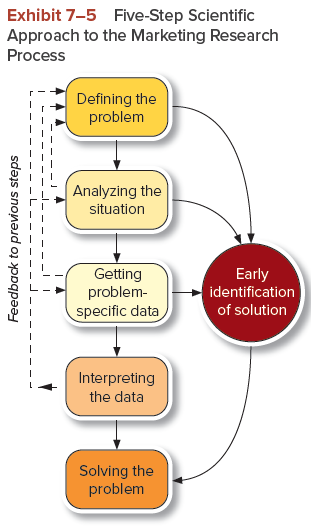
Step 1: Defining the problem
Instead of spending weeks trying to identify what’s really causing a business problem, AI tools can analyze massive amounts of company data, customer complaints, and market trends to spot patterns humans might miss. Tools like ChatGPT and Perplexity help marketing managers brainstorm research questions by examining initial problem statements and suggesting related issues that need investigation. For example, when a company notices declining sales, AI-powered sentiment analysis platforms like Brandwatch can process millions of online conversations daily to determine whether the issue stems from pricing, product quality, or competitor activities — helping researchers define problems based on real-time market intelligence rather than assumptions. (sources)
Step 2: Analyzing the situation
AI can also be used to monitor and analyze the market. For example, an AI-powered approach extends to trend identification, with retailers using machine learning algorithms to analyze social media platforms like TikTok and Instagram to spot emerging product trends before they hit mainstream markets. Marketing teams can now track thousands of influencers and trendsetters simultaneously, identifying opportunities in new target markets and product categories with unprecedented speed and accuracy compared to traditional manual monitoring methods. (sources)
Step 3: Gathering problem-specific data
AI is completely transforming how marketing researchers collect primary and secondary data, making what used to be time-consuming and expensive processes much faster and more comprehensive. For secondary data collection, AI tools can scan thousands of industry reports, competitor websites, and social media platforms in minutes rather than days, automatically extracting relevant insights and organizing them into digestible summaries. Tools like Crayon use AI to monitor competitor pricing changes, product launches, and marketing campaigns across hundreds of sources simultaneously, while sentiment analysis platforms process millions of social media posts to understand brand perception and identify emerging customer needs. (sources)
Step 4: Interpreting the data
Machine learning algorithms now analyze customer data to identify segments and patterns that humans would never spot, with predictive analytics tools forecasting which customers are likely to churn, which are ready to purchase more, and what products to recommend to each individual. AI-powered dashboards have replaced static reports, providing real-time analysis that highlights anomalies and generates plain-language summaries like “Your email open rates dropped 15% because 30% of your audience hasn’t engaged in over 60 days — consider a re-engagement campaign.” (sources)
Step 5: Solving the problem
AI transforms the final step of marketing research by automatically generating actionable recommendations and continuously monitoring their effectiveness. Instead of researchers manually crafting suggestions from their findings, AI tools now analyze patterns in the data to propose specific marketing strategies — like recommending optimal email send times based on engagement patterns or suggesting product features that address customer complaints identified through sentiment analysis. These systems can even simulate different strategic scenarios, predicting potential outcomes before companies invest resources in implementation. (sources)