
AI & Marketing Now
AI-Driven Personalized Pricing
Artificial intelligence is revolutionizing how companies set prices. AI-powered pricing systems can charge different customers different amounts for the same product. This AI-powered approach, known as personalized or surveillance pricing, uses machine learning to analyze vast amounts of customer data—from browsing behavior to location and purchase history—to predict each individual’s willingness to pay and optimize prices accordingly.
How AI-powered price personalization works
Machine learning algorithms analyze customer behavior in real time to determine personalized prices within milliseconds. These systems collect data from a customer’s every website interaction—including clicks, time spent browsing, items added to shopping carts, geographic location, device type, and purchase patterns—then use predictive models to estimate each customer’s maximum willingness to pay.
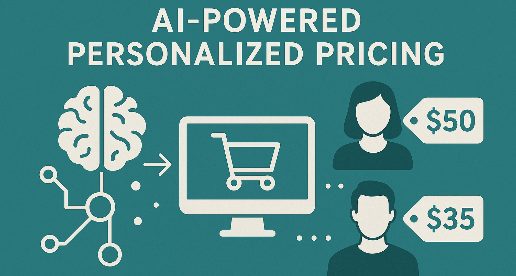
Unlike traditional dynamic pricing, where everyone sees market-driven price changes at the same time, personalized pricing creates unique prices for individual shoppers viewing identical products at the same time. The algorithms continuously learn from new data, automatically adjusting prices through complex models that process millions of pricing decisions daily. Some systems even track emotional indicators like video engagement time or cart abandonment patterns to refine their pricing predictions. (sources)
Real company examples
Major retailers are implementing sophisticated AI pricing systems with measurable results. Amazon adjusts prices on millions of items every 15 minutes using algorithms that analyze over 150 different customer factors. As of 2025, Amazon’s personalized and dynamic pricing accounted for 35% of the company’s total revenue. The e-commerce giant is testing models where frequent buyers receive lower prices while new customers may see premium pricing based on their shopping behavior and location data.
Hotel reservation service Booking.com has achieved particularly striking results through targeted personalization. Machine learning identifies specific users for special offers. The travel platform integrates OpenAI technology with its own data on properties and availability. The model delivers real-time personalized prices and destination suggestions. This tactic increased sales by 162%. Airlines’ pricing models previously used seat availability to adjust prices; newer systems incorporate social media context, the user’s device type, and browsing history to create individualized fare offers. (sources)