
AI & Marketing Now
AI’s Impact on Marketing Jobs
Artificial intelligence is transforming marketing careers at an unprecedented pace, reshaping traditional roles while creating entirely new opportunities in the field. According to recent industry reports, 72% of marketing professionals feel overwhelmed by how quickly their jobs are changing, with 43% of salespeople already using AI tools in their daily work and skills requirements accelerating so rapidly that 70% of job-related skills will change within the next five years. (sources)

Sales and content creation
Sales representatives are experiencing a fundamental shift as AI automates routine prospecting, lead qualification, and initial outreach tasks. While 41% of sellers report AI has already reduced time-consuming administrative work, the human element remains crucial for complex negotiations and relationship building. Entry-level sales positions now require proficiency with AI-powered CRM systems and data analysis tools, but successful salespeople still need emotional intelligence and strategic thinking to close high-value deals.
Content creation faces perhaps the most dramatic transformation, with AI tools now capable of generating basic copy, social media posts, and marketing materials at unprecedented speed. However, this shift primarily threatens routine copywriting tasks rather than strategic creative roles. Content creators who leverage AI for first drafts while focusing on brand voice, storytelling, and emotional connection are finding greater efficiency and creative freedom, though entry-level copywriting positions may become increasingly scarce. (sources)
Social media and research
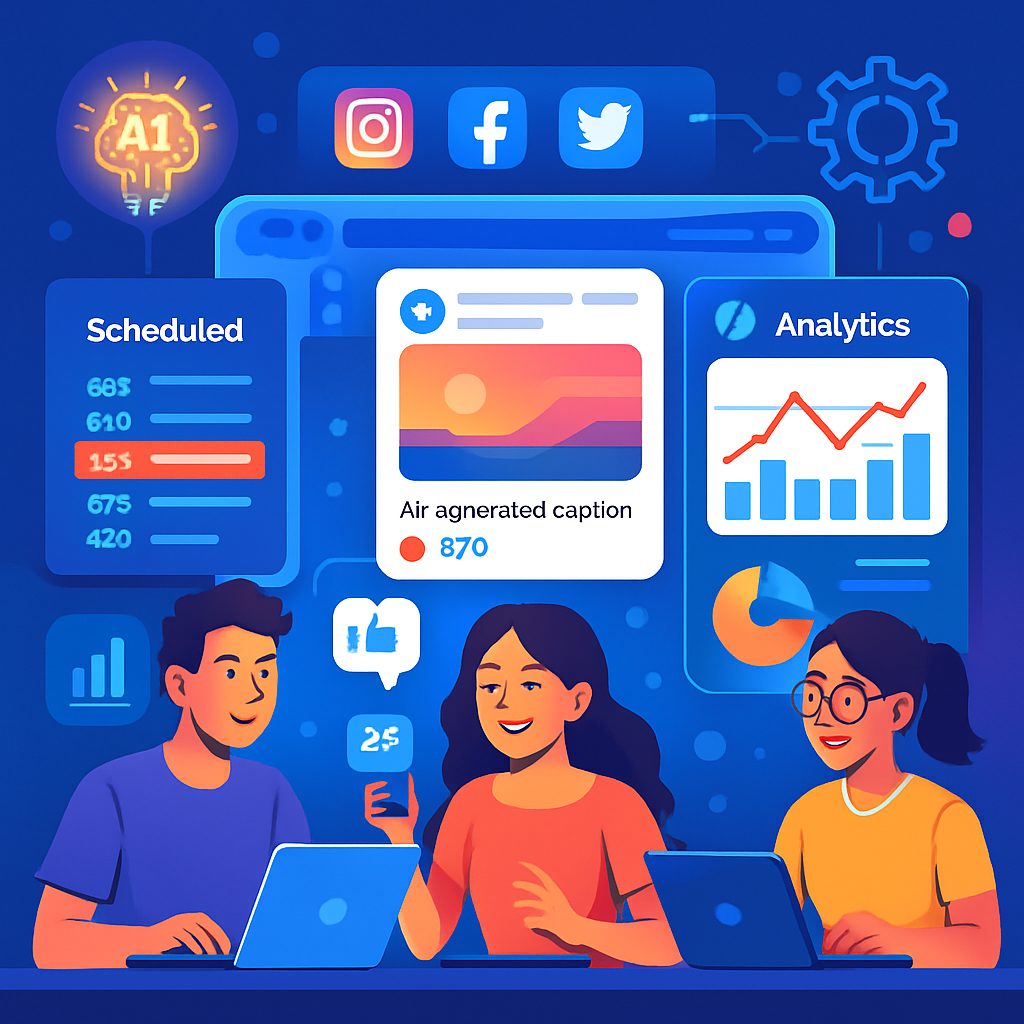
AI-powered tools are revolutionizing social media management by automating post scheduling, caption generation, content calendars, and basic analytics reporting. These technologies enable managers to handle multiple platforms simultaneously while AI systems can even respond to routine customer comments and generate viral content ideas. Young professionals possess a natural advantage in this evolving landscape since they’re already native users of these platforms and understand audience behavior intuitively.
Market research and analytics positions face both disruption and expansion as AI systems excel at processing vast datasets, identifying patterns, and generating automated reports. However, human expertise remains essential for asking strategic questions, interpreting findings within business context, and translating raw data into actionable insights. Competition intensifies as marketing graduates now compete with statistics, computer science, and economics majors, making hybrid skills in both marketing strategy and technical analysis increasingly valuable. (sources)
Customer service and PR
Customer service representatives face significant displacement as AI chatbots increasingly handle routine inquiries, order tracking, and basic problem-solving around the clock. The positions that survive will require specialized product knowledge and advanced interpersonal skills to manage complex issues, crisis situations, and customers requiring empathy-driven solutions that current AI technology cannot provide.
Public relations and publicity roles are experiencing growth despite competitive pressures, with AI tools streamlining content distribution and basic communication tasks. Recent graduates gain advantages through their comfort with emerging technologies compared to established professionals, while international experience and multilingual capabilities help differentiate candidates in this expanding field. Crisis management, media relationship building, and strategic narrative development remain distinctly human capabilities that AI cannot effectively replicate. (sources)
New AI-specific roles
The emergence of AI in marketing has spawned entirely new career categories that didn’t exist just a few years ago. Companies now actively recruit for positions like AI Marketing Strategists who develop comprehensive strategies leveraging machine learning technologies, Data Scientists specializing in marketing analytics, and Machine Learning Engineers who build and deploy predictive models for customer behavior analysis. Additional specialized roles include AI Content Strategists who maintain brand voice while utilizing automated content generation, Prompt Engineers who craft effective AI instructions for marketing campaigns, and AI Marketing Automation Directors who oversee integrated AI-powered marketing systems.
LinkedIn’s Skills on the Rise report identifies AI literacy as the fastest-growing professional skill that companies are prioritizing in hiring decisions. These new positions typically require hybrid expertise combining traditional marketing knowledge with technical proficiencies in data analysis, machine learning algorithms, and AI tool management, offering promising career paths for professionals willing to bridge the gap between marketing strategy and emerging technology. (sources)