
AI & Marketing Now
AI and Reverse Channels
Companies are discovering that artificial intelligence can transform returned products from expensive headaches into profitable opportunities. AI is helping businesses make smarter, faster decisions about what to do with items customers no longer want — whether that means reselling them, fixing them up, or recycling their materials properly.
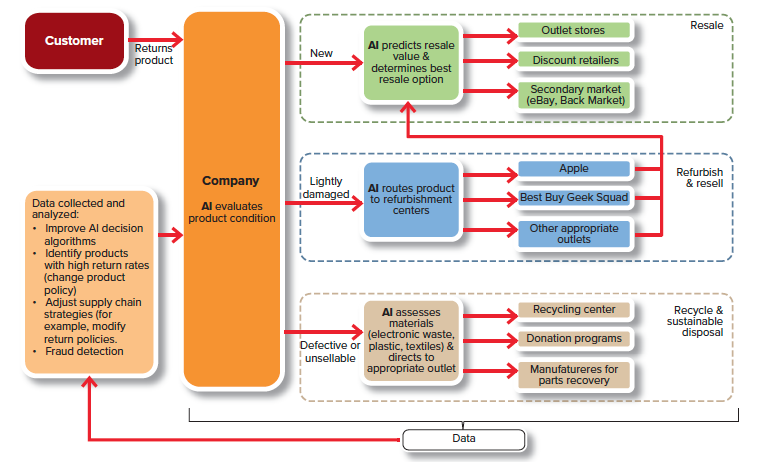
New product returns
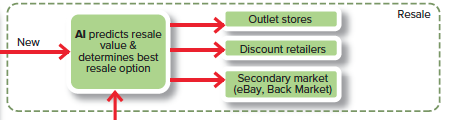
AI can now assess the best next steps for a returned product — using image recognition, customer reviews, and sales data — to figure out just how “new” it still is and how much it’s worth. For example, ReturnPro uses AI to instantly decide if an item should be sent to an outlet store, offered to a discount retailer, or listed on a secondary market like eBay or Back Market. This tech also suggests the ideal price, updating it based on real-time demand or inventory. Retail giants like Amazon have been using these systems for years, making it possible to resell “like-new” returned items with minimal human involvement. (sources)
Lightly damaged products
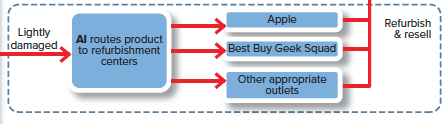
Products that are returned with minor faults or wear are routed by AI to refurbishment centers. Lenovo uses AI-powered systems that inspect returned electronics, determine necessary repairs, and even order replacement parts, speeding up the refurbishment process. Companies like Apple and Best Buy use AI to evaluate which products are worth refurbishing and reselling as “certified refurbished,” improving efficiency and customer trust. (sources)
Defective or unsellable products
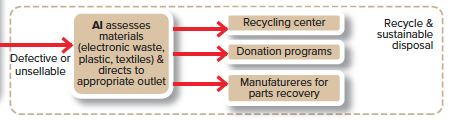
When products can’t be resold or repaired, AI helps identify materials inside them — such as electronic components, plastics, or textiles — and directs these to recycling centers, donation programs, or manufacturers who can reclaim valuable parts. AI-powered robotics and computer vision systems, like those at EverestLabs or Glacier, sort materials much faster and more accurately than humans, boosting sustainable disposal and resource recovery.
By using AI, companies are transforming reverse channels from costly, complex problems into efficient, sustainable processes. This shows how marketing, technology, and supply chain management now intersect in real-world practice. (sources)